Pages

Wednesday, 30 August 2017

social studies term 3 week 6

Treaty lesson with Matua recap


  1. Why was the Treaty needed?
the treaty was needed because of all the British coming into new Zealand


  1. How many versions of the Treaty are there?
their are two versions a English and a Mario version 


  1. How many articles are there?
their are 4 articles in the treaty


  1. What was the issue with it?
that the two versions where saying two different things 


  1. What word should have been used instead of sovereignty/governorship?
mana
  1. What does Tino Rangatinotanga mean?
absolute sovereignty


  1. What happened when a chief didn’t sign the Treaty?
they went and asked a present in the village to sign it on the behalf of the chief 


  1. What is pepper potting? What was its aim?
pepper potting is when the put a Mario family then lots of British families between each Maori family 

9. What is the Native School Acts? What was its aim?

to stop the kids at school talking Maori by not letting them speak Maori their where only allowed to speak English


waitangi day 

on waitangi day their are speeches from dignitaries cultural performances and a naval salute on waitangi day two screaming protesters where removed because they where screaming i did not know about waitangi day till i got told last class so i don't think anything of it because i did not know about it


Ship 1
Ship 2
Ship 3
Ship 4
nameRandolphCressySir George SeymourCharlotte Jane
date of departureSeptember 1850September 1850September 1850September 1850 
date of rival (length of journey) 16 December, 1850 27 December.
1850
17 December, 185010 am on Monday, 16 December 1850, 
number of passengers 217155227154
planned destination Lyttelton Lyttelton Lyttelton Lyttelton 


push factor from England

obstacles
pull factors new Zealand

  • bad working conditions 
  • low pay 
  • high rent 
  • the long voyage 
  • the people you are leaving behind 
  •  lots of land
  • start a new life 
  • new experiences 
  • new opportunists 


Tuesday, 22 August 2017

social studies term 3 week 5


person
Pulling power
land owneropen spaces 
traderLand to buy and sell for profit
merchant Investment opportunities
missionary Churchless people
invalidfine climate 
escaped convict Place to hide
black sheep of the family Place for banishment
explorer
Unmapped land
farm labourer Land for a farm
mill worker Timber and flax resources
whalers and sealers miles of coastline 


familyallowed or not reason
the Redford familynot allowed to many children 
Laura allowed she is young and her employer is moving with her 
John not allowed he is 40 and single 
the waters family not allowed to many children 
the bryrd family not allowed the man cant work 
Henry not allowed he is single. 16 and not supervised be any employer or relatives 
the leed family allowed married can work and only 2 children 
the Paul family not allowed single and to many children 


  • Trip

the trip was 4 to 6 months over a huge expanse of ocean and could be longer is the seas where worse and there where small spaces for people and there belongs

  • Passengers

they had to bring their own furnishings such as beds

they become violent, some died because of lack of water and food

  • Problems 
some problems where the ships could leak, gales break masts and rip sails, waves wash through the hatches, crew became violent, greasy decks cause accidents, cramped conditions, disease spread, food and water became bad, bad lights that caused fire, sea sickness was a constant worry, 65 children died because of lack of water, boredom


  • Extension task: Imagine that you have just arrived in NZ after completing the journey.  Complete a letter home to a family member that you have left behind in England, explaining the journey and what you thought of it. 

the journey to new Zealand took 5 months and the seas where calm most  of the way over but their was one spot that was very rough, 3 children died of lack of water and their where some fights, the boat caught on fire 2 times but we put it out in time, but their where no other problems except being very board on the boat  overall the journey was long boring and had some interesting moments. 


extension seel task

s- in 1840 their was a large influx of people wanting to move to new Zealand they went on a long voyage over a huge expanse of ocean and would probably never see their family and friends Aegean

e- the voyage took 4 to 6 months and if the seas where bad it could take longer not to mention all of the risks of the voyage held

e- some of the risks of the journey was the boats they had unsafe lights that could catch the boat on fire their where small living spaces and there was a large amount of boredom on board

l- the journey was long and hard to do and i do not know if i would go on the journey


s- i would go on the journey to now Zealand from England because of many reasons

e- the total voyage took 4-6 months unless the seas where bad but after the journey if you made it you would be in a new land a new life with better conditions then in England at that time

e- in England during this time you where shearing a house because of high rent and low pay their was bad working conditions for the bad pay and in new Zealand you could have a large plot of land and more freedom with a better climate then what is in England

l- in the end i would go on the journey because of all the opportunists that where in new Zealand at that time

the invitation of 1831


  • the Maori chiefs sent a invitation to Briton who sent busby
  • why they did this they did this because 
  1. to protect new Zealand's Maori and European people 
  2. to protect British trade 
  3. subdue the jealous and divided chiefs
  4. rely on Maori trade 
  5. deal with bad treatment of crew by ships captions 
  • James busby is someone who was sent because of a invitation and works for Australia to catch escaped  convicts and deal with other crimes 
  • busby's house was known as the treaty house witch is located in 
  • busby's job was to catch escaped convicts protect new Zealand's Maori and European people to protect British trade subdue the jealous and divided chiefs deal with the bad treatment of crews by ship captions and to deal with other crimes in new Zealand 

William Williams is a missionary who translated a letter into Maori for the chiefs  and the message says the king sea that the danger had gone and he wanted the trade routs would still be happening and busby had been sent


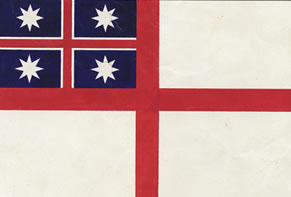
United Tribes flag


  1. it was selected on 20 march 1834 by 25 chiefs 
  2. the flag colours where red,blue, and white
  3. there are four eight pointed stars 
  4. the flag was called 'the flag of the independent tribes of new Zealand' 
  5. it was raised with the British flag and given a 21 gun salute 
  6. it gave the new Zealand ship's a flag to fly and made their cargo be duty free into foreign ports 
  7.  after the signing of the treaty of waitangi, the union jack took it's place but the 1834 flag was still used.
  8. the flag was always important to the Maori. in 1904 there was a petition to parliament asking the flag to be given back to the Maori chiefs 


Extension tasks


  1. SEEL writing practice answering the following question (and using the notes from your work previously completed) “What was the role of James Busby in New Zealand?”

s- James busby was sent to new Zealand after a invitation was sent to England from new Zealand

e- James busby role was to protect law and the well being of the new Zealand and European people

e- protect new Zealand' Maori and European people, to catch escaped convicts from Australia and return them, to protect British trade, subdue the jealous and divided chiefs deal with the bad treatment of crews by ship captions and to deal with other crimes in new Zealand 

l- so James busby role was to protect the law and help keep tensions at a low and help people


Wednesday, 16 August 2017

social studies term 3 week 4


Abel Tasman:
date: 1642
aim of the journey: to find this mysterious continent witch could be useful to trade
what happened:  he became the first known European to discover new Zealand and his men where killed
what they came back home with: a map of the west cost

captain cook
date: 1769
aim of the journey:
what happened:  the first time they made contact it ended in a fight but other tribes where friendly
what they came back home with: a full map of new Zealand

jean Francois de surville
date:
aim of the journey: he hoped to find trade and treasure in new Zealand
what happened:  they clashed with a tribe ten sailed home
what they came back home with: a map of doubtless bay in north land

Marion du Frensne
date:1772
aim of the journey: for trade
what happened:  fifteen of his men where killed then he killed three hundred Maori
what they came back home with:

  1. in 1768 caption cook left England on a voyage 
  2. land came a shout from the masthead i 7 October 1769 by a 12 year old boy as a reward cook named the point young nick's head 
  3. the ship anchored near a river  cook and some crew members became the first Europeans to set foot in new Zealand 
  4. for the next six to seven months cook sailed around the cost of new Zealand drawing the first detailed map ever 
  5. on board was a wealthy scientist called Joseph banks who wanted to find out about plants, birds and insects
  6. finally after three years absence cook and his men returned home to a heroes welcome in England 
  7.  caption cook made a second voyage to new Zealand in 1773-74
  8. his third and final journey in 1776 after visiting new Zealand he sailed to north of Hawaii there n the beach he was killed by angry warriors 


 NZ PING POWER


  1. What were the ideas?
his ideas were about immigration to new Zealand
  1. Create a poster using images to portray the ideas that Wakefield had tried to outline about New Zealand.


  1. Reading the information of “The Maori in NZ”, separate some of the key points into the following headings:
  • Education

  • Use of the land

  • Social/family set up

  • Government
2) Think about the task that we completed about the English and their ideas, and explain the key differences between the two.
3) How could these differences have affected the interaction when the 2 cultures met?


Tuesday, 8 August 2017

social studies term 3 week 3

Made in Taiwan

Oscar and Nathan’s excellent adventure


The programme traces the  journey made by Oscar and Nate to find where their ancestors migrated  from.  Nate is from New zealand and Oscar is from samoa.  Oscar and Nate used DNA to show who their ancestors were who journeyed across the Pacific. Scientists at Oxford University use dna to identify a person’s clan mother and father.  The answers who navigated their way across the Pacific used stars to navigate by; Oscar and Nate are using their genes to go backwards in time.


Nate’s family are from Mahia on the east coast of New Zealand’s north island and he went back there to open the results from the DNA test, where they were onto the welcomed.  According to the scientists, Nate’s clan mother was from East Eurasia and America (not from england as she thought).  Nate’s father is Maori.  


The next stop on their journey was 3000 km away in rarotonga in the Cook Islands.  According to the scientists who study DNA, three-quarters of Maori and Cook Islanders shear the same ancestry.  Oscar and Nate went to the spot from where, according to local polynesian, waka like the takitimu set out to New Zealand some 700 years ago.  The languages between the two cultures are very similar and Oscar says that it is just like having an older brother. Their “origin” stories – how they explain where they came from - are very similar too.  


Arriving in samoa it was Oscar’s turn to open his envelope revealing his DNA results.  His family appeared nervous, unsure of what the science would show.  Samoans can trace their ancestry back 12,000 years.   


On the next leg of their journey the pair arrived in Vanuatu and found another means of tracing the routes of their migration: patterns .  The Lapita peoples journeyed across the Pacific thousands of years ago, leaving behind the pottery which they made.  The pottery showed that the lapita people transferred their tattooing skills to pottery.  carbon dating allows scientists to accurately date when the pottery was made.  An archaeological dig showed that skeletons were well preserved in their graves.  For Oscar and Nate, the dig seemed tapu (sacred) but for the people of Vanuatu digging the graves is a way of understanding their history.


The last stage in their journey took them to Taiwan.  Again they were amazed at how similar they looked in appearance to the indigenous coastal people of Taiwan, like Niwa who showed them around.  In a museum dedicated to pre-history, Oscar and Nate could see the resemblances between the people, for examples in the facial moku.  Even some of the words used were similar.  The yam, taro and coconut all came from here and were taken across the Pacific by early voyagers.  Taiwan was the beginning of their gene story.

quiz
  1. emigrate is to exit a country
  2. push factor is something that makes you want to leave a country to go to another
  3. a example of a push factor is war, politics
  4. two things that are needed when you do a bar graph is a frame and a title
  5. name one place someone has from or two Tim Christchurch
  6. name the two case studies we are going to look at

conditions in England


  • workers where living in cheep built houses that become slums 
  • if you where fired from a job you would be kicked out of your house 
  • they had to shear there house with another family 
  • no garden o space outside for kids to play in
  • no running water 
  •  spread quickly 
  • kids diffident go to school and where under feed 
  • lots of children who were working 

push factor from England 


  • respect for law and order was taught convicts where transported
  • there where problems in the new industrial cities such as working class children being employed at jobs like chimney sweeping and pulling coal trucks underground
  • the basis of society was land a mans place in society depended on how much he owned the upper classes were the landed gentry and the lower classes where landless
government:


education:

  • education was by church, voluntary organisations and free- paying 


society:


  • the basis of society was land a mans place in society depended on how much he owned the upper classes were the landed gentry and the lower classes where landless
  • religion was organised by the established church was the protestant church other religions where allowed such as roman Catholicism


seel paragraph

statement
explanation
example
link -back to the question or to the next paragraph

s: a pull factor in something that draws you to a country
e: new Zealand is a country in the pacific ocean and lots of people want to go to
e: new Zealand have lots of open land and job opportunists
l: new Zealand is a country in the pacific ocean and has lots of open land and job opportunists and good skiing


why do the British want to leave England

s: British people want to leave England because of all the push factors that make them want to leave
e: in England  during the industrial revolution people went to go and work in the factory's in bad conditions rather then on the farms
e: during the industrial revolution people went to go work in factory's in the factory's there where bad conditions for the workers and low pay so there children had to go work in the same jobs there parents where in and there house was sheared with another family so if someone got sick it would spread very fast
l: the British wanted to leave England because of the bad living conditions, working conditions and bad pay




Wednesday, 2 August 2017

social studies term 3 week 2

migration patterns
my migration pattern
  • Australia [Alice springs]
  • new Zealand [Auckland]
  • new Zealand [Christchurch]
  • PNG
  • Fiji
  • new Zealand [Christchurch]


Movement of students in my class/ Survey sheet


Type of movement

Yes/No
Why I moved
( one or two word summary)
Class total
(Tally)
Percentage
I have moved house within this city or region (permanent movement)

yeswhen the earthquake happens1875%
I have moved house between cities or regions in New Zealand (permanent movement)

yesAuckland to Christchurch

1250%
I have lived for more than a year in a country other than New Zealand (permanent movement)

yesPNG 2.5 years
Fiji 7.5 years
my dads job 
416%
I have never moved house in my life

no i have moved lots
because of my dads job 
312%
I have visited a place in New Zealand for 5 or more days (temporary movement)

yes 
1875%
I have visited another country for 5 or more days (temporary movement)
yesUSA
holiday 
1145%
Total number in class


24100%


\